Why Follow-Up is Essential After Starting Sleep Apnea Treatment

Starting treatment for sleep apnea is an important step—but it is not the end of the journey. Regular follow-up is crucial to ensure that your therapy is effective, comfortable, and sustainable.
Why Follow-Up Matters
Sleep apnea treatment, especially with PAP therapy, requires ongoing adjustment and monitoring.
Follow-up helps to:
Optimize treatment effectiveness
Improve comfort and adherence
Identify and correct problems early
What Happens During Follow-Up?
1. Symptom Review
Your sleep specialist will assess:
Daytime sleepiness
Snoring
Sleep quality
Clinical improvement is as important as device data.
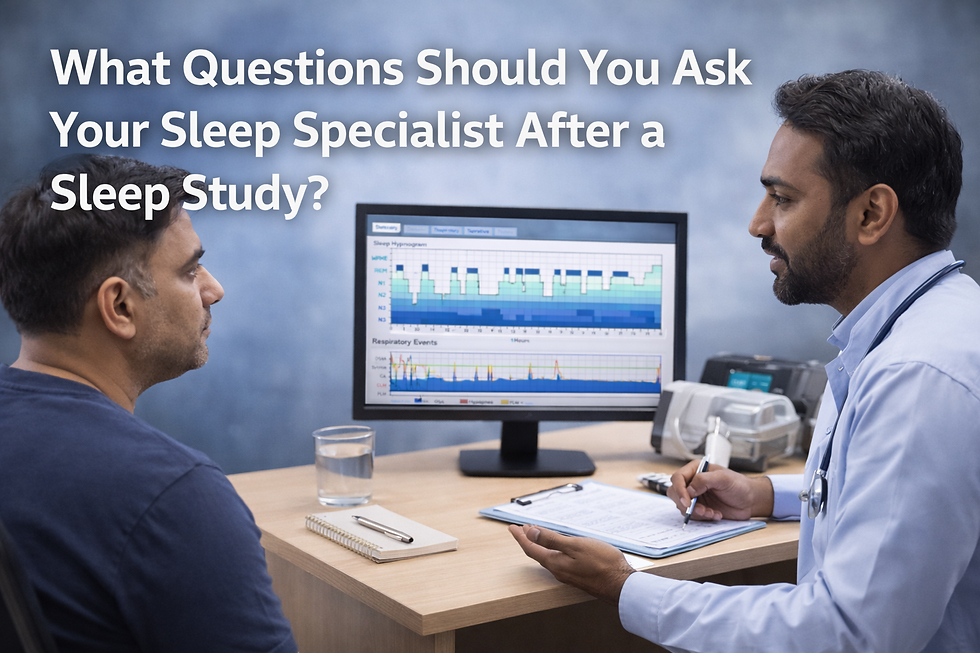
2. PAP Data Analysis
Modern CPAP/BiPAP devices provide valuable data:
Usage hours
Mask leak
Residual AHI
Pressure trends
This helps determine whether therapy is adequate or needs adjustment.
3. Pressure Optimization
Based on symptoms and data:
Pressure settings may be modified
Mode may be changed (CPAP → BiPAP if required)
PAP Troubleshooting: A Key Part of Follow-Up
Many patients face initial challenges with PAP therapy.
Common issues include:
Mask leak
Difficulty tolerating pressure
Dryness or nasal blockage
Claustrophobia
These are common and manageable, and should be addressed proactively during follow-up.
PAP Acclimatization and Desensitization
Adapting to PAP therapy takes time.
Strategies include:
Gradual increase in usage duration
Using the device while awake (e.g., watching TV)
Trying different masks for better comfort
This process is called desensitization and helps improve long-term adherence.
What is a PAP Nap Trial?
A PAP nap is a short, supervised daytime session where:
The patient uses PAP therapy in a relaxed setting
Anxiety and discomfort are addressed
Mask fitting and pressure tolerance are optimized
This is especially useful for patients struggling to adapt to therapy.
When is BiPAP or Oxygen Re-evaluated?
During follow-up, your doctor may reassess:
Need for BiPAP (in case of poor tolerance or hypoventilation)
Persistent nocturnal hypoxemia
Requirement of supplemental oxygen along with PAP
Adjustments are based on both clinical response and device data
When Should You Follow Up?
First follow-up: within 1–2 weeks
Then: at 1 month and 3 months
Long-term: every 6–12 months or as advised
When to Seek Early Review
Do not delay consultation if you experience:
Persistent sleepiness
Difficulty using PAP device
Mask discomfort or leaks
Poor sleep quality
Follow-Up is the Key to Success
Successful sleep apnea treatment depends not just on starting therapy, but on continuous optimization and support.
With proper follow-up, most patients can achieve comfortable and effective long-term use of PAP therapy.

Comments