Diagnosed with Sleep Apnea After a Sleep Test? What Happens Next?

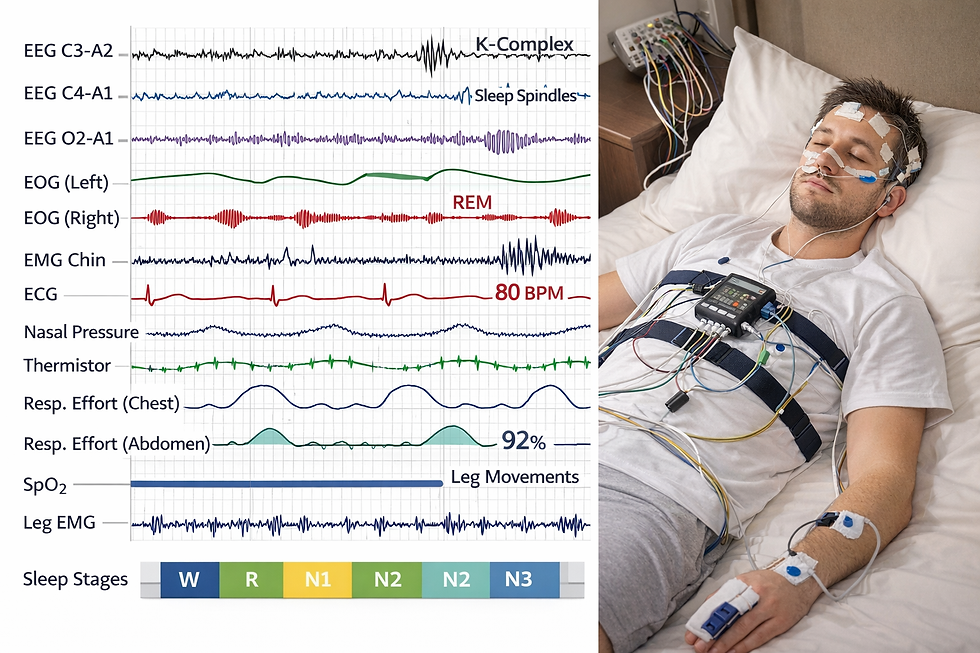
After undergoing a sleep study and being diagnosed with obstructive sleep apnea (OSA), the next step is not just starting treatment—but understanding your report in detail and individualizing therapy.
Beyond AHI: What Your Sleep Specialist Really Looks At
While the Apnea-Hypopnea Index (AHI) is important, treatment decisions are not based on AHI alone.
A comprehensive interpretation of your sleep study includes:
Sleep efficiency (how well you actually sleep)
REM and NREM sleep distribution
Oxygen desaturation index (ODI)
Oxygen nadir (lowest oxygen level reached)
Presence of positional OSA
Periodic limb movements (PLMS)
Arousal index
It is the combination of these parameters, rather than a single value, that guides management.
What is CPAP Titration?
If positive airway pressure therapy is planned, the next step is titration.
Titration means:
Identifying the optimal pressure required to keep the airway open
Eliminating apneas, hypopneas, snoring, and desaturations
This can be done by:
In-lab titration study
Auto-CPAP (APAP) devices
The goal is to achieve normalized breathing with good sleep quality
When is CPAP Enough?
CPAP is usually sufficient when:
Obstructive events are the primary issue
Oxygen desaturation improves with airway splinting
When is BiPAP Considered?
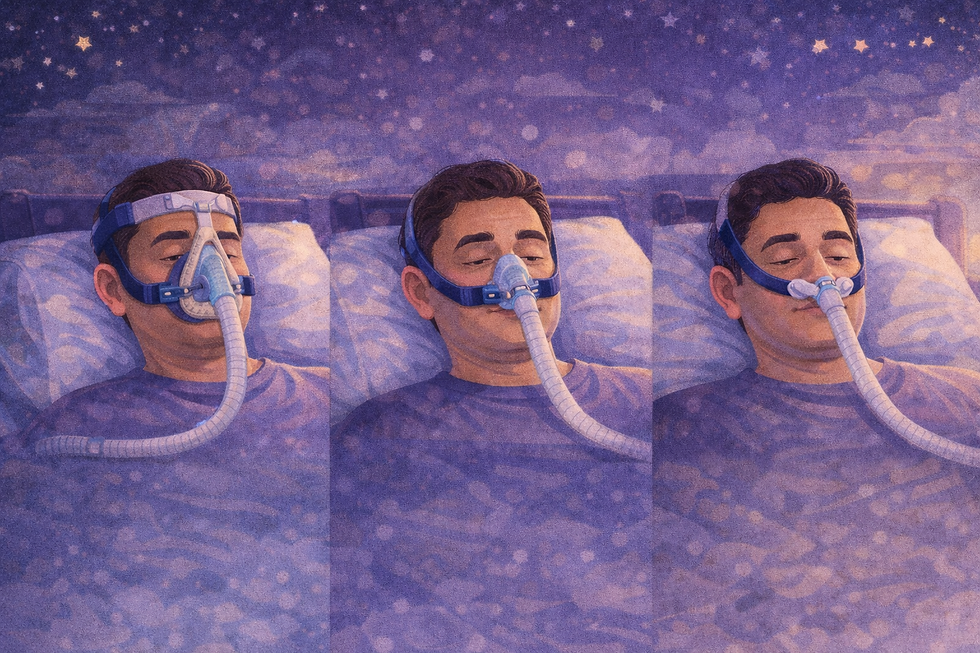
Bi-level Positive Airway Pressure (BiPAP) may be preferred in certain situations:
High pressure requirement on CPAP
Poor tolerance to CPAP
Presence of hypoventilation syndromes
Coexisting conditions like:
COPD (overlap syndrome)
Obesity hypoventilation syndrome
BiPAP provides:
Higher inspiratory pressure (IPAP)
Lower expiratory pressure (EPAP)
Better ventilation support
When is Oxygen Added to PAP Therapy?
Supplemental oxygen may be added when:
Persistent nocturnal hypoxemia despite adequate PAP therapy
Significant oxygen desaturation not fully corrected by airway support
Coexisting lung disease (e.g., COPD)
Important: Oxygen is not a substitute for PAP therapy but may be used in combination when indicated
Individualised Treatment Planning
Management of sleep apnea is not one-size-fits-all.
Treatment decisions depend on:
Sleep study parameters
Symptom profile
Tolerance to therapy
Associated physiological disturbances
A detailed, expert interpretation ensures accurate therapy selection and better outcomes
Moving Forward After Diagnosis
A sleep study diagnosis is the starting point. The next step is a structured, personalized treatment plan, guided by a sleep specialist, to restore normal sleep and breathing.

Comments