10 Common CPAP Problems and How to Fix Them
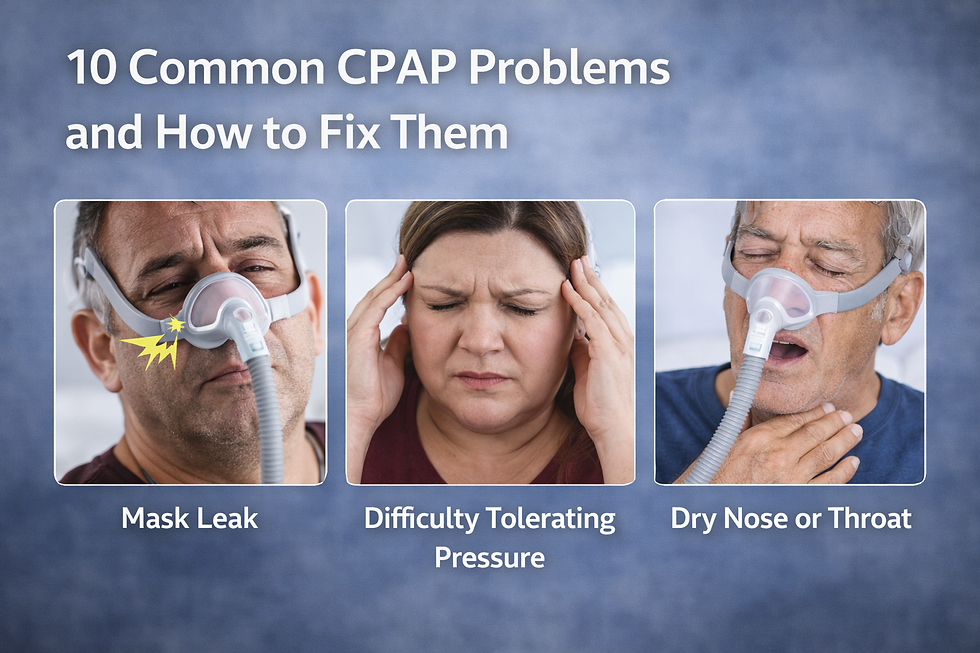
Starting CPAP therapy is one of the most effective ways to treat sleep apnea. However, many patients face challenges in the beginning.
The good news is that most CPAP problems are common, expected, and easily manageable.
1. Mask Leak
Problem:
Air leaking around the mask reduces effectiveness and causes discomfort.
Fix:
Adjust mask fit properly
Try a different mask size or type
Replace worn-out cushions
2. Difficulty Tolerating Pressure
Problem:
Feeling uncomfortable with airflow, especially at higher pressures.
Fix:
Use the ramp feature
Consider pressure adjustment
Try BiPAP if needed
3. Dry Nose or Throat
Problem:
Dryness or irritation due to airflow.
Fix:
Use heated humidifier
Increase the humidity level
Use nasal saline
4. Nasal Congestion or Blockage
Problem:
A blocked nose makes CPAP uncomfortable.
Fix:
Use nasal sprays or antihistamines
Treat underlying allergies
Consider a full-face mask
5. Claustrophobia or Anxiety
Problem:
Feeling uncomfortable wearing the mask.
Fix:
Gradual acclimatization
Use CPAP while awake initially
Try different mask designs
6. Air Swallowing (Aerophagia)
Problem:
Bloating or discomfort due to swallowing air.
Fix:
Adjust pressure settings
Use BiPAP if needed
Avoid lying flat immediately after meals
7. Skin Irritation or Pressure Marks
Problem:
Redness, soreness, or marks on the face.
Fix:
Adjust mask straps
Use mask liners
Ensure proper mask fit
8. Removing Mask During Sleep
Problem:
Unconsciously removing the mask at night.
Fix:
Practice wearing mask during daytime
Improve comfort and fit
Address pressure intolerance
9. Noise from Device
Problem:
Device or mask noise disturbing sleep.
Fix:
Check for leaks
Ensure proper assembly
Replace faulty components
10. Not Feeling Better Despite CPAP
Problem:
Persistent sleepiness or symptoms.
Fix:
Review CPAP data (residual AHI, leaks)
Check usage hours
Reassess pressure settings
Evaluate for other sleep disorders
The Role of PAP Troubleshooting
Many CPAP issues can be resolved through structured troubleshooting during follow-up.
Adjustments in:
Mask type
Pressure settings
Device mode
can significantly improve comfort and effectiveness.
Importance of Acclimatization and Desensitization
Adapting to CPAP takes time.
Start with short durations
Use during relaxed activities
Gradually increase usage
This improves long-term adherence.
When to Seek Help
Consult your sleep specialist if:
You cannot tolerate CPAP
Symptoms persist
You experience significant discomfort
Take Control of Your Therapy
CPAP therapy works best when it is personalized and optimized. Most problems can be solved with proper guidance and follow-up.
With the right support, you can achieve comfortable and effective treatment.


Comments