Home Sleep Test vs Lab Sleep Study: Which One is Right for You?

If your doctor has advised a sleep test, you may wonder whether to choose a home sleep test or a lab-based polysomnography. Understanding the difference can help you make the right decision for accurate diagnosis and effective treatment, although the decision should be made by the sleep specialist.
What is a Sleep Study?
A sleep study (polysomnography) evaluates your sleep by monitoring breathing, oxygen levels, heart rate, and sleep patterns. It helps diagnose conditions like sleep apnea and other sleep disorders.
Types of Sleep Studies
1. Home Sleep Test (Level 3 Study)
Conducted in the comfort of your home
Records limited parameters:
Breathing
Oxygen levels
Heart rate
Best suited for:
High risk for obstructive sleep apnea (OSA)
Patients without complex medical conditions
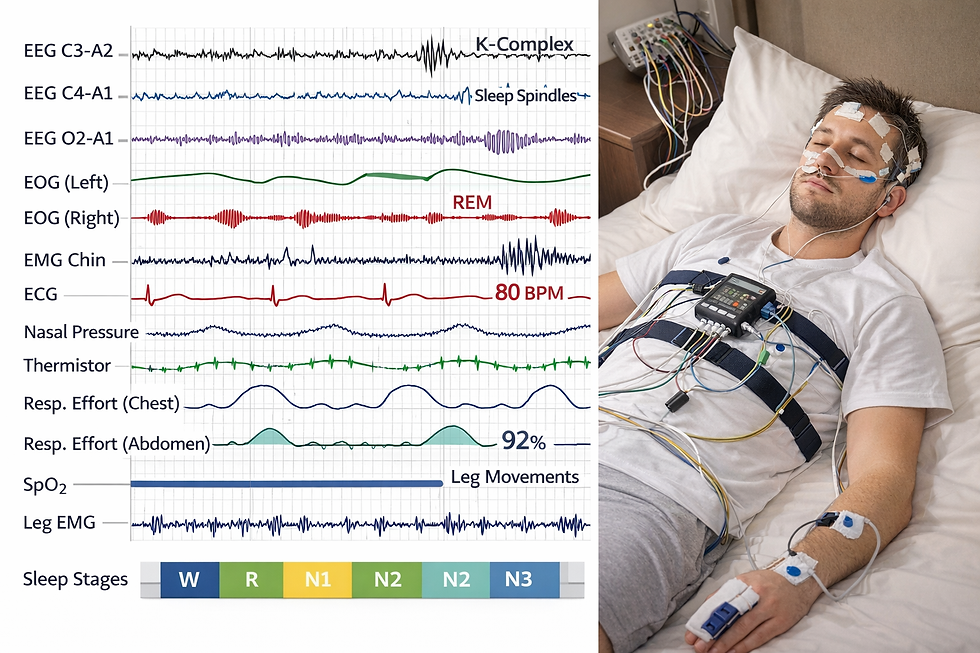
2. Lab Sleep Study (Level 1 Polysomnography)
Conducted overnight in a sleep laboratory
Monitored by trained technicians
Records comprehensive data:
Brain activity (EEG)
Eye movements
Muscle activity
Breathing and oxygen levels
Best suited for:
Complex cases- multiple comorbidities
Unclear diagnosis
Multiple sleep disorders
Key Differences
Feature | Home Sleep Test | Lab Sleep Study |
Location | Home | Sleep lab |
Monitoring | Limited | Comprehensive |
Accuracy | Moderate | High (gold standard) |
Comfort | High | Moderate |
Which One Should You Choose?
The choice depends on:
Your symptoms
Medical history
Clinical evaluation by your doctor
In many cases of suspected sleep apnea, a home sleep test may be sufficient. However, for a detailed evaluation, a lab study is preferred.
Why Choosing a Reliable Sleep Service is Crucial
Not all sleep studies provide accurate or reliable results. The quality of the test and interpretation plays a critical role in the correct diagnosis.
Ensure the following:
The test is conducted using standardised equipment
The study is supervised or reviewed by trained professionals
The report is interpreted by qualified experts
Importance of Certified Sleep Professionals
A reliable sleep study should be:
Scored and analysed by a Registered Polysomnographic Technologist (RPSGT) Reviewed by a certified sleep specialist
Look for certifications such as:
RPSGT (Registered Polysomnographic Technologist)
CCSH (Certification in Clinical Sleep Health)
International Sleep Disorders Specialist certifications
Pulmonary Critical Care and Sleep Specialists
Neurologists
These ensure:
Accurate data recording
Proper scoring of sleep stages
Correct diagnosis and treatment planning
Why This Matters
An incorrect or poorly conducted sleep study can lead to:
Misdiagnosis
Inappropriate treatment
Persistent symptoms
A high-quality, well-interpreted study ensures better outcomes.
Take the Right Step for Better Sleep
Choosing the right type of sleep study—and the right provider—is essential for accurate diagnosis and effective treatment.
If you are unsure which test is suitable for you, a proper consultation can help guide the decision.

Comments